


Donate now to support the LLIFLE projects.
Your support is critical to our success.
Your support is critical to our success.
Since 4 Aug 2013
sponsored link

Accepted Scientific Name: Mammillaria perezdelarosae Bravo & Scheinvar
Cact. Suc. Mex. 30(4): 76 (1985).
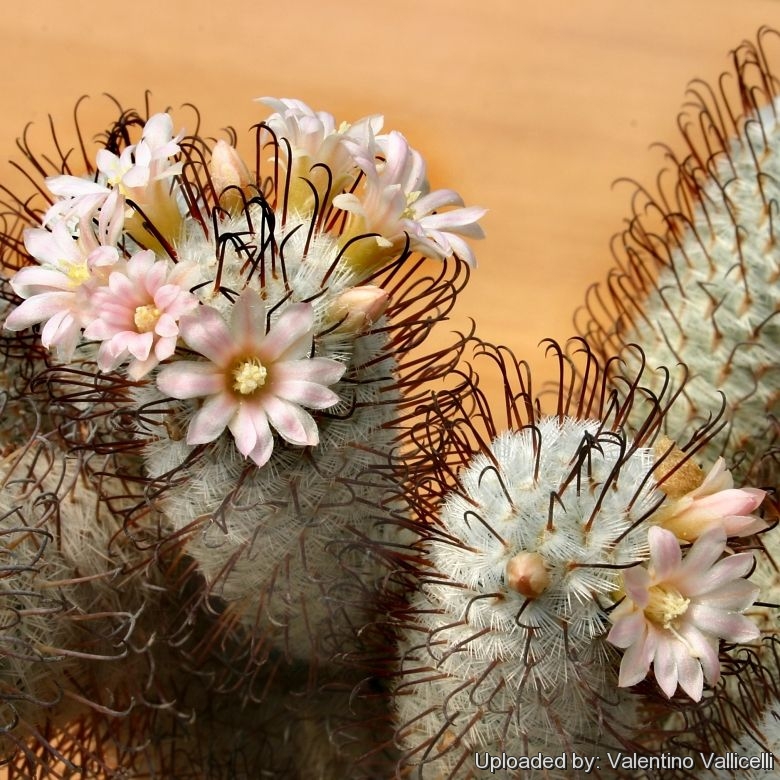
Escobariopsis perezdelarosae (Mammillaria perezdelarosae) Photo by: Valentino Vallicelli
Similar to the related Mammillaria bombycina, it differs in its darker centrals and denser, pectinately arranged radials that completely conceal the epidermis, and in its paler pink flowers.
Similar to the related Mammillaria bombycina, it differs in its darker centrals and denser, pectinately arranged radials that completely conceal the epidermis, and in its paler pink flowers.
Synonyms:
- Mammillaria perezdelarosae Bravo & Scheinvar
- Escobariopsis perezdelarosae (Bravo & Scheinvar) Doweld
- Mammillaria bombycina subs. perezdelarosae (Bravo & Scheinvar) D.R.Hunt
See all synonyms of Mammillaria perezdelarosae
back
Accepted name in llifle Database:Mammillaria perezdelarosae Bravo & Scheinvar
Cact. Suc. Mex. 30(4): 76 (1985).
Synonymy: 4
- Mammillaria perezdelarosae Bravo & Scheinvar
- Escobariopsis perezdelarosae (Bravo & Scheinvar) Doweld
- Mammillaria bombycina subs. perezdelarosae (Bravo & Scheinvar) D.R.Hunt
- Mammillaria perezdelarosae subs. andersoniana W.A.Fitz Maur. & B.Fitz Maur.
Mammillaria perezdelarosae f. cristata hort.
(Oftens found as M. perez-de-la-rosae.)
back
Subspecies, varieties, forms and cultivars of plants belonging to the Mammillaria bombycina group
 Mammillaria bombycina Quehl: Solitary or clustering cactus, some clones cluster aggressively and can form 50-90 cm wide mounds. It combines clean, glassy white radial spines with hooked reddish-brown centrals.This plant will produce several complete circles of contrasting light carmine flowers.
- Mammillaria bombycina f. albicentralis hort.: Has evenly white or creamy-white hooked central spines, (tips never reddish-brown). Cultivated form.
- Mammillaria bombycina f. flavispina hort.: Has evenly creamy-yellow or yellow hooked central spines, (tips never reddish-brown). Cultivated form.
- Mammillaria bombycina f. monstruosa green clone hort.: It is a strange monstrous cactus cultivar that forms very rubbery and squishy green and purple glob.
- Mammillaria bombycina f. monstruosa white clone hort.: It cluster aggressively and forms a gorgeous white mounds with a fluffy appearance.
- Mammillaria bombycina cv. Split Spine: This very rare cultivar has unique "Split spines". This is an exclusive feature never seen in other cacti.
- Mammillaria perezdelarosae Bravo & Scheinvar: Differs from Mammillaria bombycina in its darker centrals and denser, pectinately arranged radials that completely conceal the epidermis, and in its paler pink flowers.
- Mammillaria perezdelarosae subs. andersoniana W.A.Fitz Maur. & B.Fitz Maur.: distinguishable for the smaller size, slower growth and straight central spines (not hooked). It is believed to be one of the most beautiful Mammillaria. Distribution: Northeast, Zacatecas, Municipio Via Garcia
- Mammillaria perezdelarosae f. cristata hort.: crested form with stems densely covered with glassy white radial spines with hooked dark-brown centrals. It is one of the more beautiful crested Mammillaria.
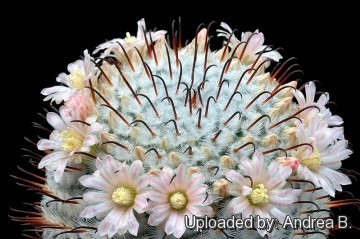
Escobariopsis perezdelarosae (Mammillaria perezdelarosae) Photo by: Andrea B.
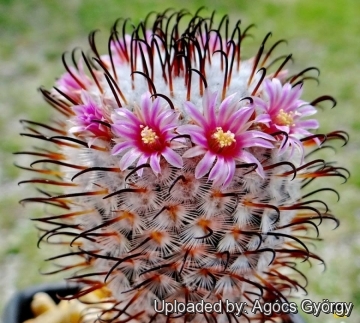
Escobariopsis perezdelarosae (Mammillaria perezdelarosae) Photo by: Agócs György
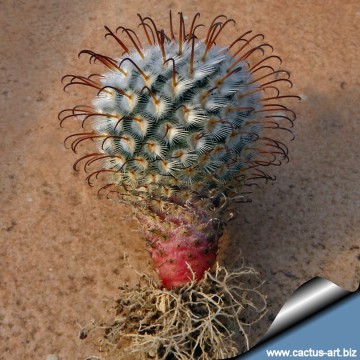
Escobariopsis perezdelarosae (Mammillaria perezdelarosae) Photo by: Cactus Art
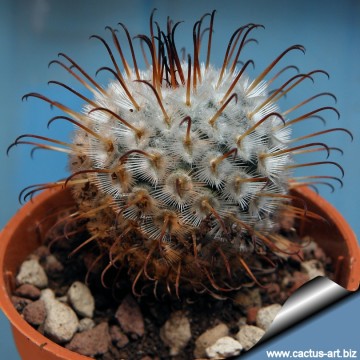
Escobariopsis perezdelarosae (Mammillaria perezdelarosae) Photo by: Cactus Art
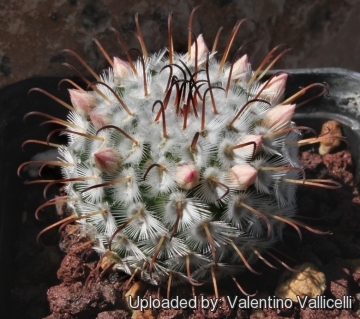
Escobariopsis perezdelarosae (Mammillaria perezdelarosae) Photo by: Valentino Vallicelli
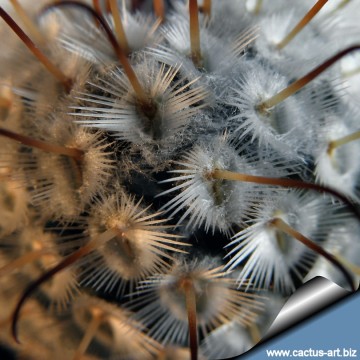
Escobariopsis perezdelarosae (Mammillaria perezdelarosae) Photo by: Cactus Art
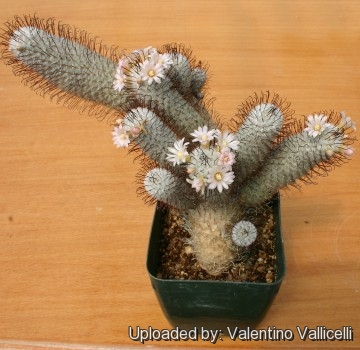
Escobariopsis perezdelarosae (Mammillaria perezdelarosae) Photo by: Valentino Vallicelli
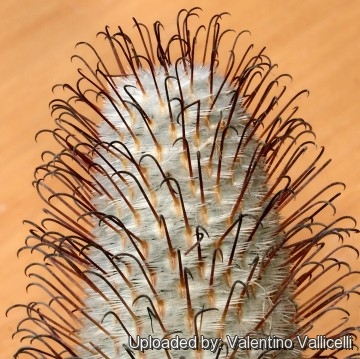
Escobariopsis perezdelarosae (Mammillaria perezdelarosae) Photo by: Valentino Vallicelli
Your Photos
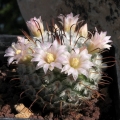
by Valentino Vallicelli
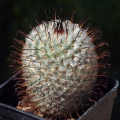
by Valentino Vallicelli
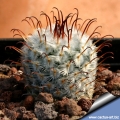
by Cactus Art
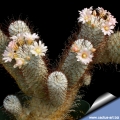
by Cactus Art
| Your Actions | |
|---|---|
 |
Back to Escobariopsis index |
 |
Back to Cactaceae index |
 |
Back to Cacti Encyclopedia index |
©2013-2026 LLIFLE - Encyclopedia of living forms
Privacy stantement - Terms and conditions - How to cite - About us - Feedback - Donate

Privacy stantement - Terms and conditions - How to cite - About us - Feedback - Donate